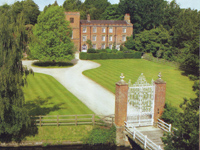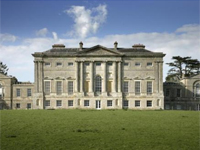
Conran collects another Georgian gem: Wardour Castle, Wiltshire

Wardour Castle, Wiltshire (Image: Strutt & Parker)

The recent financial crisis has forced many properties onto the market and easily one of the grandest was the main apartment of Wardour Castle in Wiltshire which has now been bought by the fashion designer Jasper Conran.

The Apartment (as it’s imaginatively known) includes the wonderful central staircase, described by Pevsner as ‘the most glorious Georgian interior of Wiltshire’, plus the other major state rooms which were restored with the assistance of John Pawson, the high priest of Minimalism.  This particular property has featured twice in this blog, once for suggested conversion back to being a single family home, but also later with the news that the property was one of the grandest repossessions in the country.
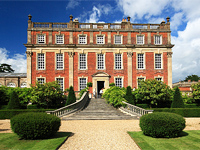
Ven House, Somerset (Image: Mike Searle/wikipedia)

What is interesting about Conran’s purchase is that he appears to be collecting fine Georgian houses in the same way one might collect furniture or paintings.  In 2007 he bought the incredibly elegant Ven House in Somerset for just less than the £8.5m asking price. At the time the house had languished on the market for two years before Conran took it on.  Although more famous as a fashion designer, Conran has a good track record with property restoration having bought Walpole House in Chiswick, London for £7.25m which was sold following refurbishment for £12.5m in 2008 or Flemings Hall in Suffolk which he sold for £2m in 2006. Ven required comparatively little work and has remained his country home, opening it up for use by local organisations for charity fund-raisers.

It seems fashion designers have a taste for Georgian as Jasper’s father Terence Conran lives in Barton Court, an elegant red-brick villa-style house in west Berkshire which he bought in the 1970s and has carefully restored.  On a much larger scale, the American fashion designer Leon Max famously bought the magnificent Easton Neston in Northamptonshire for £15m in 2005.  The grade-I listed house, designed by Nicholas Hawksmoor and built between 1695-1710, was the home of the Hesketh-Fermor family for nearly 500-years before the current Lord Hesketh decided to sell up. Leon Max purchased the house with the intention of converting a fire-damaged wing into a base for his fashion company.

Perhaps the natural grace and light of the best of the Georgian homes appeals just as much to the aesthetic eye of the designer as it does to most of us, confirming their broad appeal.  Happily for Wardour Castle it seems that has caught the eye of someone who has a good track record of looking after the wonderful homes he has bought.  Perhaps he might be open to suggestions for others that need some attention: Melton Constable Hall perhaps?

Full story: ‘Conran captures the repossessed castle: Fashion designer Jasper snaps up £7m ‘Billy Elliot’ house – for just £2.75m‘ [Daily Mail]

Bargains from difficult circumstances: country house reposessions

Sheriff Hutton Hall, Yorkshire (Image: Savills)

An article in the Sunday Times Home section (11 June 2010) includes two houses featured on this blog; one recently and one back in November 2009.  The story this week exposes that both are for sale as some of the grandest repossessions in the country with lenders forcing the sale.

Each of these houses when bought was probably the realisation of an aspiration many have to own a grand country house.  Yet, what goes up can come down and each owner has now been forced out of their dream.  The first house, Sheriff Hutton Hall in Yorkshire is a grade-I listed gem surrounded by 170-acres and indeed featured on this blog entitled ‘If I won the lottery…‘.  Originally built in the early 1600s as a hunting lodge before being remodelled in a lighter brick in 1732.  The outbuildings were constructed using quantities of stone and panelling from nearby Sheriff Hutton Castle, it also features richly decorated ceilings with plasterwork by John Burridge and Francis Gunby, who is also thought to have worked on the Dining Room at Temple Newsam in Leeds.

Sheriff Hutton Hall was sold in 1998 and became the northern branch of the East 15 acting school.  Today however, despite strenuous efforts by the owner, a secondary lender has called in their loan forcing the sale.  Originally for sale, through Savills, at offers over £5m (nearer £6m was apparently hoped for) the price has now dropped to £4.5m.

Sale details: ‘Sheriff Hutton Hall‘ [Savills]

Detailed architectural description: ‘Sheriff Hutton Hall‘ [British Listed Buildings]

Wardour Castle, Wiltshire (Image: Strutt & Parker)

The second property, Apartment One in Wardour Castle, Wiltshire, was only launched in Country Life magazine a few weeks ago and was featured here with the idea that it might be used as a starting point for the conversion of the house back to a single home (‘Conversion reversion: Wardour Castle‘).  Yet it now appears that it was the original project to convert this Georgian gem that has caused the current vendor’s difficulties.  The house, designed by James Paine, was built in the 1770s for the eighth Baron Arundell and was (and in some ways still is) the grandest and largest house of it’s era in Wiltshire.

After use as a school for thirty years until 1990 it had an uncertain future.  Nigel Tuersley then bought the grade-I listed house for £1m in 1992 and decided to convert the house into ten large apartments with Nigel retaining the largest in the centre of the house for himself.  However with property boom turning to bust the bank was unwilling to continue funding the project.  This first manifested itself when the same apartment, all 23,000 sq ft of it, was put on the market for £7m in 2008 – possibly a bit ambitious even at the time.  With the contents now removed (not that you can really tell as the interior was designed by the famous Minimalist architect John Pawson) the apartment now waits for someone with a more reasonable £2.75m through Strutt & Parker.

The house is another in a small but sadly growing list of ‘posh repossessions’ (those valued at over £1m) which show that dreams, however big, can still be brought down and that perhaps the hardest part of reaching the top is staying there.

Sale details: ‘Apartment One – Wardour Castle‘ [Strutt & Parker]


Credit: original story in the Sunday Times Home section – 11 July 2010.  Story only available online to subscribers.

How to get depressed quickly: the English Heritage Buildings at Risk Register 2010

Winstanley Hall, Lancashire (Image: English Heritage)

This blog has highlighted several country houses which are at risk but the true scale of the issue is unfortunately much larger, as the publication of the 2010 English Heritage Buildings at Risk Register shows.

Country houses all too easily can move from being secure, watertight buildings to having minor problems to becoming seriously at risk due to their size and the high standards required to repair them necessarily making even simple tasks much more expensive.  For the owners this can mean that the burden of looking after their ancestral family home becomes a daily challenge which, rather than facing, can be easier to ignore – especially if they are able to simply shut the door to a wing and forget the damp and leaks.

One of the greatest enemies of the country house is obscurity – particularly when combined with negligent or incapable owners. For some the house is merely an obstacle to redevelopment and so it is in their interest to forgo maintenance and hope that the house quickly and quietly deteriorates to the point where they can apply for permission to demolish.  Unfortunately under-resourced councils are rarely able to regularly survey all the listed buildings in the area meaning that houses can slip through the cracks.  The current economic climate means that it is even more unlikely that councils will be able to fully fund the heritage teams to ensure that they are able to ensure owners meet their obligations.

Melton Constable Hall, Norfolk (Image: English Heritage)

Although English Heritage have had some limited successes (e.g. Sockburn Hall, County Durham) there are still far too many houses at risk – I counted nearly 100 in a couple of searches.  It should be noted that houses are included even where works are planned or under way such as at Clarendon House, Wiltshire which was recently sold (with estate) for a reputed £30m and where restoration is expected to be completed by the end of 2010).  However, other examples include:

Others on the list include:

The head of English Heritage, Simon Thurley, said at the launch:

“Neglect is a slow, insidious process whose costly damage takes time to become clearly visible. Cuts in both private and public spending are currently inevitable but armed with our Heritage at Risk Register, English Heritage is well-equipped to guard against the loss of the nation’s greatest treasures and to suggest effective and economical strategies to protect our national heritage.”

One can only hope that this proves to be the case and that EH are able to fully fulfil their role particularly in relation to country houses and ensure that these beautiful buildings aren’t allowed to quietly slip into dereliction, depriving future generations of wonder of these grand houses.

More details: English Heritage Buildings at Risk 2010 or you can search the 2010 Register

Phoenix for sale: Beaurepaire House, Hampshire

Beaurepaire House, Hampshire (Image: Knight Frank)

Launched this week ( 23 June 2010) in Country Life magazine is a fine, grade-II* listed, moated manor house set in nearly 250 acres of Hampshire.  Open the first set of impressive wrought iron gates and follow the drive down to the ancient moat and through the second, equally impressive, set of white painted gates over the wooden bridge. Before you stands a beautiful red-brick manor house – but why is the house set in one small corner of the island? Why does the drive lead over the moat but unusually not to the middle of the house?  And why does that tower look a bit new?

The answer to all these questions is that Beaurepaire House, as it now stands, is what remains of an important and beautiful manor house which burnt down in 1942 after a chimney fire.    What happened subsequently is an interesting example of how disaster need not lead to the loss of the whole house or the estate.

Beaurepaire House, Hampshire before the fire (Image: Lost Heritage: England's Lost Country Houses)

Beaurepaire House has royal connections having been visited twice, once by Henry VIII in 1531 and then by his daughter Elizabeth I during her visit to The Vyne.  The moat itself dates from 1369 but the original house was built in the 16th-century but was badly damaged during the Civil War and was only rebuilt in 1777.  The design of the new Georgian ‘Gothick’ house followed the rare structure of having a square core with castellated corner turrets.  There are relatively few examples of these houses – and the ones we have today are all ruined to some degree (Ruperra Castle, Wales / Lulworth Castle, Dorset) or lost entirely (Compton Bassett House, Wiltshire).

At the time of the fire the house was owned by one of the richest men in the country, Sir Strati Ralli, but wartime building restrictions prevented restoration. After the war the estate was owned by Lady Sherfield and in 1965 she decided to restore the remaining servant’s wing as a house and commissioned the well-known architect Tom Bird, who had restored many other country houses, to make the house habitable.  Bird decided to add a sympathetic tower, which continued the existing architectural style, to the fire-damaged southern flank of the remaining wing to not only provide structure but also to improve the proportions of what was left.  The addition was less than 10% of what remained but successfully ensured that the house was able to rise again from the ashes of the fire to retain the role it had enjoyed for hundreds of years as the centrepiece to an impressive country estate.

_____________________

Property details: Knight Frank seem to have forgotten to put the details on their website.   Nevermind, here’s a link to all the Hampshire houses they’re selling in the hope that they soon add it in: Knight Frank: Hampshire

The relative cost of your English country house

Great Hockham Hall, Norfolk (Image: Savills)

So you’ve decided you really want a country house.  Nothing too big; more a residential estate than a working or sporting one so perhaps just 48 acres. Luckily your four-bed house in the best part of Fulham is worth £1.75m so you can sell up and surely move straight into your dream rural arcadia? Unfortunately a recent survey by upmarket estate agents Savills has shown that you might need just a bit more money than that.

As always, proximity to London is the key factor in determining how far your money will stretch.  With the Russians and Middle Eastern families not willing to be too far from the cultural delights of Bond Street the price of a decent country house with 48 acres in Surrey tops the table.  To secure a decent small estate in the nicest parts would require between £15m-£20m but a similar property in Hampshire would set you back just £10m on average.

So with the those two counties ruled out, where next?  The Cotswolds have always been popular with the corresponding effect on prices but if Hampshire is too expensive then unfortunately you’re also out of luck in Gloucestershire with the average there hitting £12m – but north Oxfordshire might look attractive with the average of between £7m-£8m.

Distance from London reduces prices but with broadband making working from your country home on Friday possible Dorset or Wiltshire are still very attractive but more affordable – but you’ll still have to expect to pay between £4.5m-£5m.  Fewer transport options make East Anglia even cheaper with a country house in Norfolk going for around £3.25m – which makes the pretty Great Hockham Hall [pictured above], a grade-II listed Queen Anne house built in 1702 and with 47.66 acres, almost a bargain at £2.95m.

So where could you trade in your Fulham house for a small country estate? Step forward Lincolnshire where the average is the lowest in England at ‘just’ £1.75m-£2.25m. So proving that everything is relative it seems that even the high prices of London don’t always directly translate into a ticket to the country life unless you’re willing to go where the market takes you.

______________________

Source: research by Savills (but listed not on their website) and reported in The Times ‘Bricks & Mortar’ property supplement on Friday 18 June (but their website doesn’t allow access so no link there either).

If you are interested in the rest of the report or the averages for other counties I’m guessing the best contact is Alex Lawson at Savills (Rural Research) on +44 (0) 20 7409 8882 or email alawson@savills.com.