Welsh ‘Versailles’ still awaiting saviour: Kinmel Hall for sale

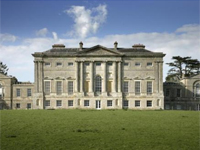
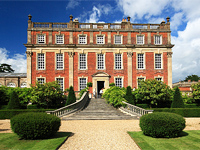
Kinmel Hall, Conwy (Image: Hannells)

When Kinmel Hall was bought in March 2006 by an investment company it was almost immediately advertised on their website as a ‘a unique development opportunity’ with plans for use as either hotel, spa, offices, conference venue or apartments.  Yet, nearly four years later, this impressive mansion is still languishing without a clear future.

The Kinmel estate was bought in 1786 using the vast wealth generated for the Hughes family in the eighteenth century through their half-ownership of the copper mine in Parys mountain which generated up to £150,000 a year at it’s peak (equivalent today to about £200m measured against average earnings).  The Hughes family lived in the house already there until it was rebuilt in 1842-3 in a Palladian style designed by the famous Georgian architect Thomas Hopper for the 1st Lord Dinorben.  When this house burnt down shortly afterwards in 1848 their huge income meant that an even larger house could be built to replace it.  Designed by William Nesfield in a monumental chateau-style and built between 1871-76 it was for an age of lavish house parties and featured 52 bedrooms and accomodation for 60 live-in staff.  The Hughes family lived there until 1929 when it became a health spa, then a hospital during WWII and then a school from 1945 until a large fire forced them out in 1975.  Restored in the 1980s, it was sold several times before being purchased by Derbyshire Investments who still own it today.

The original descendants of the Hughes’ still own the 5,000-acre Kinmel estate – all that remains of their original holding of 85,000 acres they once owned across the area.  The grade-I listed Hall and the 18 acres of walled gardens would make a magical location for what ever final purpose is decided – but the important task is to determine that future.  I suppose it’s too much to hope that it will again be a family home but any sensitive use which preserves this historic house as part of Wales’ architectural heritage is to be encouraged.

More details: ‘Kinmel Hall, North Wales‘ [Derbyshire Investments]

Midmar Castle – all that glistens isn’t quite golden

Midmar Castle, Aberdeenshire (Image: The Times)

It seems that an interesting story used to help speed up the sale of a house but for Midmar Castle in Aberdeenshire even a tale of sunken gold hasn’t helped secure a sale a year after the house was launched. The category-A listed castle was launched on the market on February 2009 with a fulsome write-up in The Times relating how the value of the house had underwritten a risky – but ultimately successful – expedition to recover £50m in Russian gold which had gone down with HMS Edinburgh in WWII.

The castle was originally started in 1411 but was greatly extended in the late sixteenth-century by the remarkable local granite-masons known as the Midmar school. They were responsible for Midmar and four other castles built nearby – Crathes, Frazer, Drum, Craigievar – all of which are now owned by the National Trust apart from Midmar.  Based on the traditional defensive z-plan with three main towers, this is an impressive and historic home.

The original price tag of £5m (set by Knight Frank who have now been replaced by Savills) for the house, gardens, outbuildings and surrounding 185-acres has now dropped to £3.5m – which represents an average drop of over £100,000 for each month it has remained on the market.   This may reflect some over-optimistic valuations but it’s still a superb, historic castle set in a perfect mini estate – ideal for anyone who wishes to experience the Scottish country lifestyle but doesn’t want the thousands of acres which often come with a house of this quality.

Property details: ‘Midmar Castle, Aberdeenshire‘ [Savills]

An architectural gem – but still slow to sell: Iver Grove

Iver Grove, Buckinghamshire (Image: The Listed Property Owners Club)

When it was completed in 1724, Iver Grove was one of the first houses in Britain built using the then radical Palladian styling; pre-dating even Lord Burlington’s famous Chiswick House.  Iver Grove is a beautiful and compact red brick essay in the use of the Classical elements with a Doric portico and topped with an elegant pediment.  Although originally attributed to either Sir Christopher Wren or Nicholas Hawksmoor, it’s now more widely accepted to be the work of John James who worked with Wren on St Paul’s Cathedral and succeeded him as the surveyor of the Commissioners’ Churches.  The front steps lead into a spacious and light entrance hall featuring the original oak staircase.

That the house is here today is remarkable in itself as after WWII it was in a parlous state and at risk of becoming one of the many hundreds of country houses demolished in the 1950s.  The house was smothered in ivy, riddled with dry rot and had been subject to various thefts of lead and fixtures and vandals who had smashed all but one of the Wedgewood stained-glass panels in window over the staircase.  The house was one of the first to be bought by the Government in an effort to save it – although this led to angry questions in the House of Commons from philistine MPs who demanded to know why we had spent more saving an “extremely beautiful house” (Lord John Hope) than we had sent to aid the Congo.  Such amazing short-sightedness still prevails today with those asking why we spend any money on heritage with similarly spurious justifications.

Anyway, thanks to the Government, the house was rescued through a programme of works which included demolishing the collapsed Victorian wing – and in so doing bring the house back to it original scale, and conveniently making it more manageable.  So when the this grade-I listed house was first launched in 2007 with much press coverage including a glowing write-up by Marcus Binney in The Times (‘A fast track to perfection‘) and later in Country Life (‘Georgian estate for sale‘) it was thought it would sell quickly.  However, £6.5m price tag was probably boosted by its architectural importance above the fact that it was a six-bedroom house with just 17-acres near to the M25.  The price was probably quickly identified as the issue as in The Times article in May the price is £6.5m, by the time the Country Life article was published in December the price was given as ‘offers over £5m’.  Now, two and half years later the price has dropped to a more reasonable £4.25m, and hopefully this will entice a new sympathetic purchaser with a desire to live in an important country house with manageable grounds but who will appreciate being just 17 miles from Hyde Park corner.  Actually, if I win the lottery, I’ll probably go for it.

Full details: ‘Iver Grove, Buckinghamshire‘ [Knight Frank]

Want to work in an Adam-designed office? Cumbernauld House for sale

Cumbernauld House, Lanarkshire

One alternative to demolition for a country house whose time as a home had come to an end was conversion to offices.  Many houses were thus saved from the wreckers pickaxe although some conversions were more sensitive than others, with some unfortunate houses being reduced to shells with the historic interiors severely compromised.  Some were very successful such as Donington Hall (headquarters to BMI), Mamhead House (formerly HQ to a local construction firm but well looked after and now back as a home) and Gaddesden Place (now home to a software company).

One such house which was converted in 1955 and in need of a sympathetic new owner is the grade-A listed Cumbernauld House in North Lanarkshire, currently for sale at offers over £1m.  Built for the Earl of Wigton in 1731, the house was designed by William Adam (1689-1748), one of the leading architects of his day, and includes some of his typical flourishes such as arched windows, channelled masonry and carved tympana.  Although the Adam interiors were lost in a serious 1877, the reconstructed interior is still noteworthy.  Currently empty, this house deserves a new lease of life and would make a suitable and impressive headquarters – although part of me does faintly hope that someone might want to take on the challenge of turning it back into a home.

More details: ‘Cumbernauld House‘ [SAVE Britain’s Heritage] – as Building of the Month this link may not work after Feb 2010 but there is a dedicated website at : www.cumbernauldhouse.com

Still available for sale – the country houses proving difficult to sell

Despite the enthusiasm of the estate agents, it seems that some of the most impressive houses featured in the glossy adverts at the front of Country Life magazine are proving difficult to sell.  Whether this is due to a poor local market or unreasonable prices, or just bad luck, here are a few stunning country houses which are still looking for buyers.

Noseley Hall, Leicestershire (Image: Knight Frank)

Noseley Hall in Leicestershire has been in the family of the present Lord Hazelrigg for nearly 300 years but was put up for sale in April 2009 at a guide price of £14m for the grade-II* listed house plus the 1,200-acre estate.  Built in 1728 on the back of Northumberland coal mining wealth, the house is decorated with works of art (though fewer now following several auctions), and fine plasterwork.  However, Lord Hazelrigg admitted that the estate doesn’t cover the costs of running the house, and so he decided to sell, but it’s still listed on the Knight Frank website – and still with a guide price of £14m.   More details: ‘The last of the romantics‘ [Sunday Times]

Dowdeswell Court (Image from Savills)

Another house which has been for sale is Dowdeswell Court in Gloucestershire which was first advertised in 2005 and then sold for £4.75 but then came back on the market in summer 2009 with a guide price of £7.9m (and was featured in this blog).  When serial restorer James Perkins took on the house it had been a 46-room nursing home resulting in a huge restoration project and since he sold in 2005 has moved on to restoring other country houses including Aynhoe Park.  The grade-II house was built between 1833-35 by local architect Charles Paul of Cheltenham and was originally three storeys but during the 1920s the top storey was neatly removed.  The more manageable house is a beautiful example of neo-Classical detailing combined with modern comforts. The house is available through either Knight Frank or Savills.

Compton Pauncefoot Castle - Somerset (Image: Bidwells)

The final property for this list is the impossibly beautiful Compton Pauncefoot Castle in Somerset which has been for sale since 2006.   Built in 182o, the grade-II listed house sits in a 1,278-acre estate with 40-acres of stunning gardens and lakes.  Originally on the market for £22m, it failed to sell even during the boom years of 2007-8 and despite 20 buying agents being invited to a launch event, and being featured in the The Sunday Times, it’s now being sold at auction – though I suspect the reserve would be near the current price advertised on the agents websites of in excess of £17m.  Perhaps the fact that it’s only for sale as a whole may have put off those who might just want the house and immediate grounds – but this would deny the owner the certainty of privacy that the surrounding estate would bring.  The house is available through Bidwells and Knight Frank (who despite putting it as their lead advert in Country Life this week fail to have it on their website).

Credit crunch hits prices of country estates in Scotland

It sells but at what price? (Image: http://www.sxu.hu)

Despite the ever hopeful claims of the estate agents that a good country estate will always sell, it appears that, at least in Scotland, the average selling price has fallen sharply.

Research by the estate agents Strutt & Parker has shown that between 2008 and 2009 the average selling price of the 13 country estates – defined as “significantly more than a house with some land but not farms or forestry properties” – sold in that period the average price dropped by £2.6m. Of the 13 sold, seven were sold for less than the asking price.

Full story: ‘Country estates caught in credit crunch as prices halve in 12 months‘ [The Times]

Thorpe Hall to be sold off?

Thorpe Hall, Cambridgeshire (Image: wikipedia)

Perhaps it’s reading too much into a story but when a journalist says that “…despite its magnificence the former stately home, built in 1653, is impractical as a hospice – haemorrhaging money, which could, and should, be spent on patient care.” does this indicate an intention to sell this important Grade-I listed house? And “…Thorpe Hall, however beautiful, is not an ideal site”.  Perhaps the fact that the Sue Ryder Foundation, who own the house, have also launched an £8m appeal for a new hospice in the city is related?

Thorpe Hall has the rare distinction of being one of the few houses built during the dark years of the Commonwealth when there was little building activity in England.  Although an undoubtably beautiful house the “principal staircase with heavily carved foliated open panels to broad balustrade” is probably not suitable for a stairlift.

Hopefully, the discussion and consultation process will be open as possible – the worst scenario would be for the hospice to move to a new location leaving this important building in a disused limbo.  Here’s a thought though; rather than passing to another institutional use, it would be interesting to explore the possibility of it becoming a home again.  This would be the least impact option in terms of long-term day-to-day use but would probably entail some covenants regarding the long-established access to the grounds and gardens.  Anyway, it’s just a thought.

Full story: ‘Sue Ryder Care: Encouraged by public’s support for new hospice‘ [Peterborough Evening Telegraph]

Ranton Abbey to be resurrected – or replaced?

Ranton Abbey, Staffordshire (Image: Knight Frank)

When the historic Ranton Abbey was accidentally set alight and gutted in 1942 by the Dutch troops stationed there, it was likely that it would go the way of many other houses and simply be demolished. Yet the Earls of Lichfield, who owned the 300-acre estate, simply left it and focused on turning the land into a first-class shoot, allowing the house to slowly collapse, leaving just the ivy-clad walls visible today.

The death of the 5th Earl, the famous photographer Patrick Lichfield, in 2005, prompted the family to look again at the estate.  However, rather than simply sell it they decided to obtain planning permission for the building of a new house and have now put both for sale at £3.5m.  Although an obvious course of action, the choices made seem a bit odd.  The new house is strongly Palladian in design but the projections produced so far have it sited so close to the red-brick shell of the old house, and the grey stone of the church, that it seems to have almost landed there by accident.  It certainly does not seem to appear at home in this location and appears almost arbitrary, resulting in three large architectural elements fighting for prominence in a small area.

As the respected architectural writer Marcus Binney says in the ‘Bricks and Mortar’ supplement of Friday’s Times newspaper, surely the better option would be to restore the original house.  This would bring back the balance which existed before and remove at once the obvious difficulties of leaving the old house as a giant garden ornament to compete with the new house.  Whoever buys the estate and planning permission will hopefully think again about this scheme and look seriously at restoration.

Full story: ‘Historic homes: restoration dilemma‘ [The Times]

Property details: ‘Ranton Abbey, Staffordshire‘ [Knight Frank]

Moor Place goes to second viewings

Moor Place, Hertfordshire (Image: Strutt & Parker)

Agents from Strutt & Parker have reported that the stunning Grade-I listed Moor Place in Much Hadham, Hertfordshire, is receiving second viewings – though I doubt anyone would spend the offers-over-£17m asking price for the house and 781-acre estate without going back a few more times.

The beautiful red-brick house dates from 1779 with later additions, which combine to create an almost perfect view of a Georgian country house.  The house was built for James Gordon by the relatively unknown archictect Robert Mitchell who encased the originally Elizabethan house in an elegant facade with the south wing being rebuilt in 1907 by Sir Ernest Newton.  Inside a fine cantilevered stone staircase leads up to a master suite and five further bedrooms  on the first floor with five more on the floor above.  Downstairs the elegant staircase hall leads to a library, dining room and sunny drawing room. More accomodation is available in the 1886 Norman Shaw west wing.  All in all, this is a true trophy estate and the proximity to London means that the price tag is, judging by the viewings, not unrealistic.

Property details: ‘Moor Place, Hertfordshire‘ [Strutt & Parker]

House of the week for sale: Abbey House, Dorset

Abbey House, Dorset (Image: savills.com)

The New Year period can be a very quiet time for the sale of country houses.  This can often be easily seen in the much-thinner-than-usual selection of property adverts at the front of Country Life magazine, the weekly bible of the country house.  However, someone has obviously decided to steal a march on the spring rush by putting a stunning home on the market; Abbey House in Witchampton, Dorset.

The Grade-II* listed property was originally built in the early 16th century and is thought to be the first brick-built house in Dorset.  Formerly known as Witchampton Manor, it has 5 reception rooms, 8 bedrooms, 5 bathrooms (you might want to do something about that), plus the usual selection of outbuildings. The 6.8-acres of beautiful gardens also includes river frontage – perhaps an eco-alternative to the swimming pool.

This is a jaw-droppingly lovely house and I suspect with the currently dearth of decent larger homes on the market the owners may well have timed the sale very well as the bonus money from the City looks to find a country hole to escape to.

More details: ‘Abbey House, Dorset‘ [savills.com]